Rethinking the Receipt: What You're Really Paying When You Skip the Farmers' Market
There's a particular kind of confidence that comes from rolling a flatbed cart through the aisles of a big-box store. The sheer scale of it — the five-pound tubs, the three-pack of romaine, the 48-count bags of apples — signals abundance. It signals thrift. It signals that you, a responsible adult, are getting ahead of next week.
Except a lot of us aren't. We're getting ahead of Thursday's compost bin.
The conventional wisdom that warehouse shopping and discount grocery chains deliver better value than farmers' markets has been repeated so often it's basically folklore at this point. But when you start pulling that assumption apart — really digging into what a household actually spends, wastes, and absorbs in hidden costs — the math gets uncomfortable fast.
The Spoilage Problem Nobody Talks About
The USDA estimates that American households throw away somewhere between 30 and 40 percent of the food they purchase. That's not a rounding error. That's nearly half your grocery run, quietly decomposing in a landfill.
Bulk buying, despite its appeal, is a significant driver of that waste. When you purchase a three-pound clamshell of spinach because it's cheaper per ounce than the smaller version, you're only getting that deal if you actually eat all three pounds before it turns. Most households don't. The math that looks great in the aisle collapses the moment you factor in what ends up in the trash.
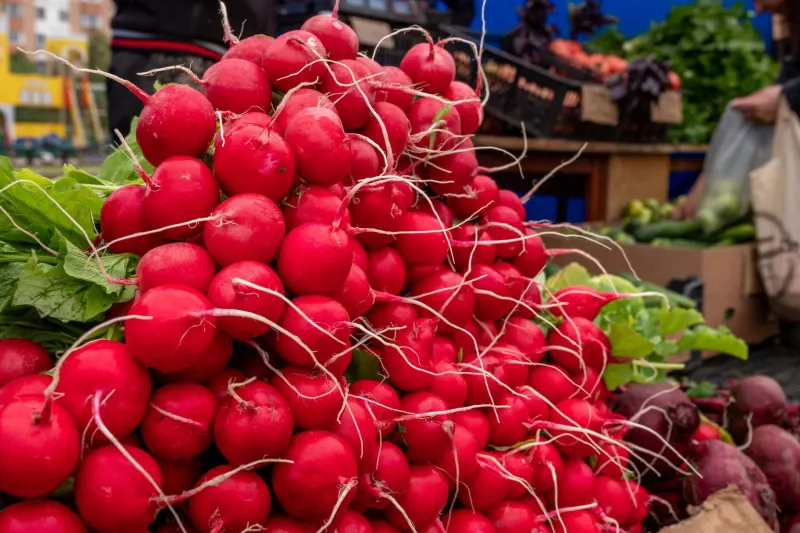
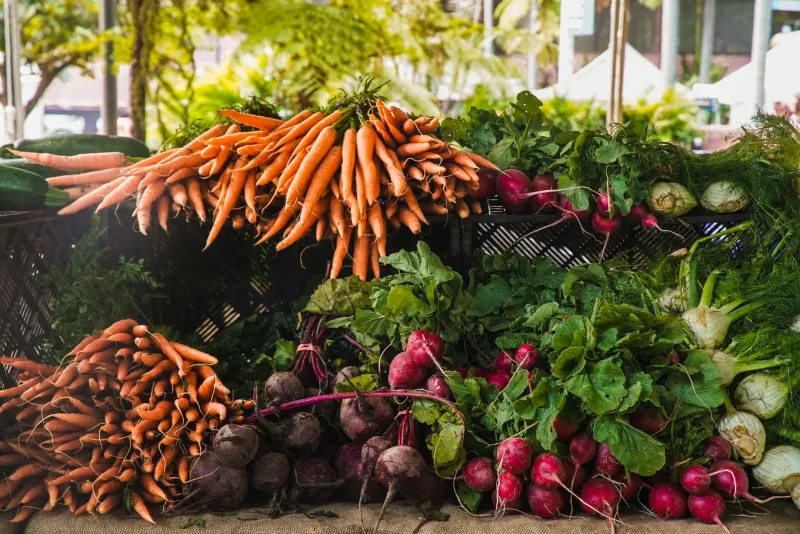
Farmers' market produce, by contrast, tends to move differently. You're buying what you need for the week — a bunch of kale, a handful of beets, whatever looked good at the stand. The quantities are human-scale. And because local produce is typically harvested within days (sometimes hours) of hitting the market, it has a longer usable life in your kitchen than something that spent a week in a refrigerated truck crossing three state lines.
When you calculate price per serving actually consumed — not price per ounce purchased — local produce frequently closes the gap in ways the sticker price never hints at.
Packaging: The Cost You're Literally Throwing Away
Here's something worth sitting with: when you buy a shrink-wrapped tray of chicken breasts encased in styrofoam, sealed in plastic, and dropped into a plastic bag at checkout, you are paying for all of that. It's baked into the price. The industrial food system's packaging costs are estimated to account for anywhere from 10 to 30 percent of a product's retail value, depending on the category.
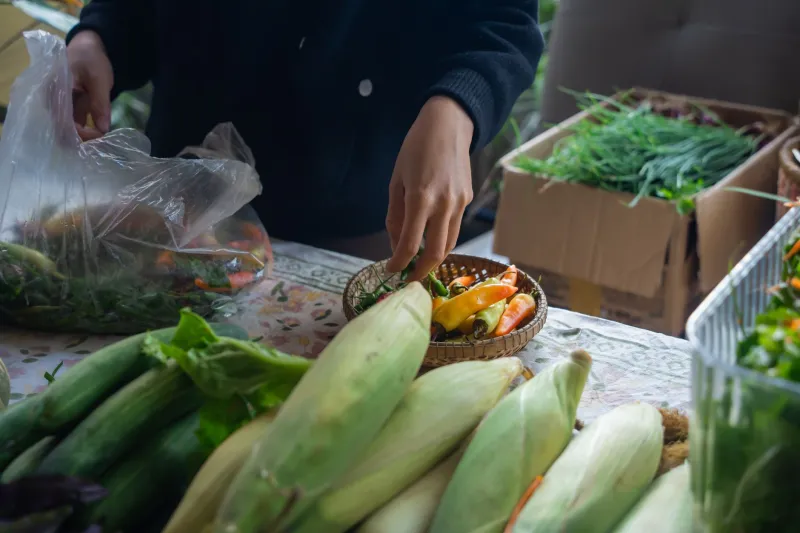
At a farmers' market, you hand over money, you get food. Sometimes in a paper bag, sometimes in nothing at all. You bring your own tote, your own containers for honey or jam, your own produce bags if you're organized about it. The transaction is startlingly direct.
That packaging reduction isn't just good for the planet — it's good for your budget. You're not subsidizing a plastics supply chain every time you buy a tomato.
What "Cheap" Food Costs the Healthcare System
This is where the conversation gets bigger than grocery receipts.
The industrial food model has been extraordinarily efficient at producing calories. It has been considerably less efficient at producing nutrition. Decades of soil depletion, monocropping, and prioritizing shelf life over nutrient density have resulted in produce that, calorie for calorie, delivers less of what your body is actually looking for than it did fifty years ago. A 2004 study published in the Journal of the American College of Nutrition found measurable declines in protein, calcium, iron, and vitamins in 43 garden crops over the previous half-century.
When food is less nutritious, people eat more of it trying to feel satisfied — or they end up nutrient-deficient in ways that show up as chronic health issues down the road. The American healthcare system spends hundreds of billions of dollars annually treating diet-related diseases: type 2 diabetes, cardiovascular disease, obesity-linked conditions. Those costs get distributed across insurance premiums, taxes, and personal medical bills.
Nobody's asking you to solve the healthcare crisis at the farmers' market on a Saturday morning. But it's worth understanding that the artificially low price of industrial food is partly subsidized by costs we pay elsewhere — in our bodies, in our healthcare system, and in the federal farm subsidies that prop up commodity crops at the expense of diversified, regenerative growing.
The Price-Per-Nutrient Calculation
Let's get concrete for a second.
A bunch of locally grown, in-season kale at a farmers' market might run you $3. A bag of pre-washed, pre-chopped kale at a big-box store might be $5.99 for what looks like a larger quantity. On the surface, the warehouse bag wins.
But: that local bunch was harvested two days ago and will stay vibrant in your fridge for ten days. The bagged kale was processed, washed in a chlorine solution, sealed, and shipped — and it's probably got four or five days left in it, max. The local bunch is unwashed and intact, meaning the cellular structure is still holding its nutrients. And because it's in season and grown in actual healthy soil, the nutrient profile is likely richer to begin with.
Factor in that you'll use all of the local bunch and maybe 60 percent of the bag, and suddenly the math reverses entirely.
This kind of price-per-nutrient-actually-consumed calculation isn't how we're trained to shop. We're trained to look at the unit price sticker. But that sticker tells you almost nothing about what you're actually getting.
Building a Smarter Shopping Habit
None of this is an argument that farmers' markets are accessible to everyone — they're not, and that's a real and serious equity issue that the sustainable food movement needs to keep grappling with honestly. SNAP benefits are accepted at a growing number of markets across the country, and many markets run matching programs that double the value of those dollars, which helps. But access remains uneven, and acknowledging that matters.
For households that do have options, though, a hybrid approach tends to work well. Hit the farmers' market for produce, eggs, and whatever proteins your local vendors carry. Use conventional grocery stores for pantry staples, grains, and anything that isn't realistically available locally. Stop buying bulk produce you know you won't finish.
Shop with a list built around what's actually in season in your region — because in-season local produce is almost always at its price floor, its nutritional peak, and its flavor best simultaneously. That's not a coincidence. That's just how food is supposed to work.
The Real Bargain
Convenience has a cost we've been encouraged not to calculate. The big-box model is brilliant at making that cost invisible — distributing it across waste, health outcomes, environmental degradation, and federal subsidies until it disappears from your individual receipt.
But it doesn't disappear. It just shows up somewhere else.
The farmers' market asks you to pay the honest price upfront: for the labor, the land stewardship, the nutrient density, the short supply chain. That price often looks higher on a Saturday morning. Over the course of a week, a month, a year — when you count what you actually eat, what keeps you healthy, and what doesn't end up in the trash — it frequently isn't.