Smaller Farms, Bigger Future: Why Local Agriculture Might Be More Ready to Scale Than You Think
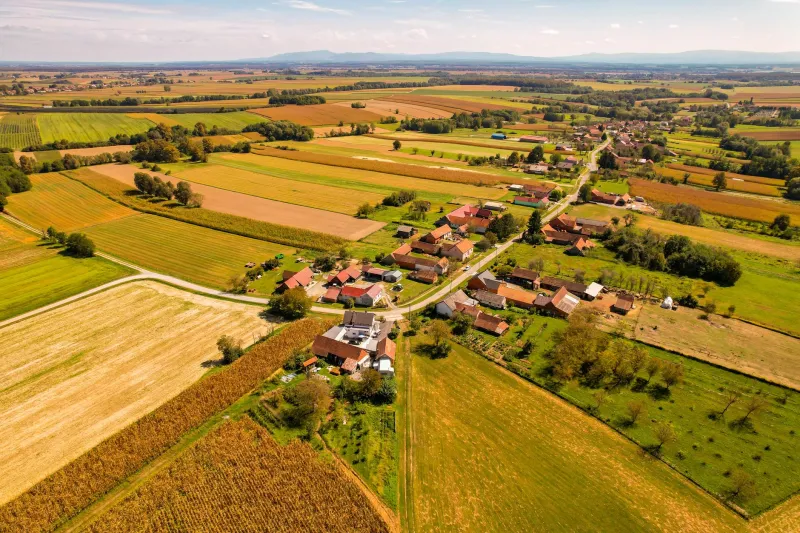
Let's get the cynical argument out of the way first, because it's the one you'll hear most often in policy circles, agricultural economics departments, and the comment sections of any article that dares to suggest local food might be worth investing in.
It goes like this: The US feeds 330 million people. Local and small-scale farms produce a tiny fraction of the national food supply. Industrial agriculture — with its economies of scale, mechanization, and supply chain efficiency — is the only system capable of delivering food at the volume and price point that Americans actually need. Local food is lovely, but it's a boutique solution to a mass-scale problem. Nice for people who can afford CSA boxes and Saturday morning farmers markets. Not a serious answer to national food security.
There's enough truth in that argument to make it sticky. But there's also enough that it leaves out to make it seriously misleading.
What the Numbers Actually Show
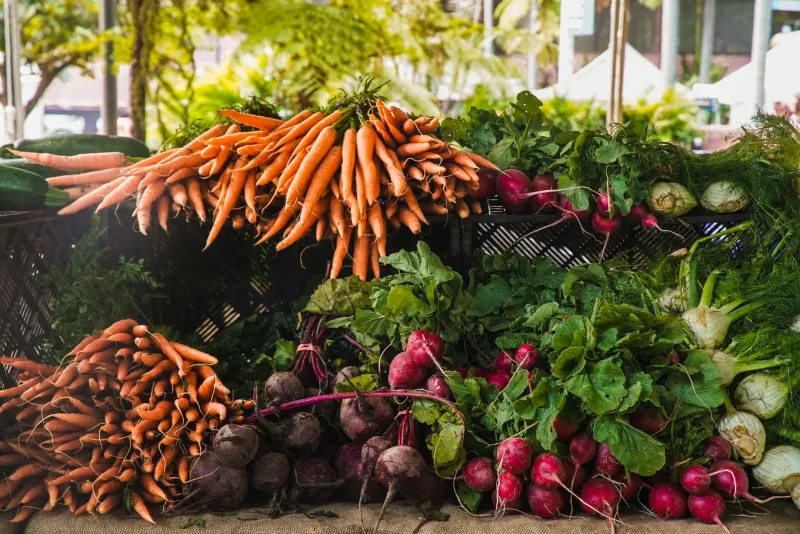
Here's something that often gets buried in the big-agriculture-versus-local debate: according to USDA data, farms with less than $350,000 in annual sales — what the agency classifies as small and very small farms — still account for roughly 90 percent of all farms in the United States. They don't produce 90 percent of the food, but they do produce a substantial and often undercounted share of the fruits, vegetables, and specialty crops that make up the most nutritious parts of the American diet.
More importantly, the infrastructure question — the biggest legitimate barrier to scaling local food — is not a fixed obstacle. It's a solvable problem that a growing number of communities are already solving.
The Appalachian Food Hub in Abingdon, Virginia, aggregates produce from more than 200 small farms across the region and distributes it to schools, hospitals, grocery stores, and restaurants that couldn't efficiently source from individual farms on their own. The hub handles the logistics — cold storage, transport, food safety compliance, marketing — that small farms typically can't manage solo. Farmers get access to institutional buyers. Buyers get a reliable, consistent supply of regional food. Everyone gets a better deal than the commodity market would offer.
This model is replicating itself across the country. The Local Food Hub in Charlottesville, Virginia. Red Tomato in the Northeast. Tuscarora Organic Growers Cooperative in Pennsylvania. These aren't experiments anymore — they're functioning businesses with multi-million-dollar revenue and measurable impact on regional farm viability.
The CSA Model: Proven, Growing, and Underestimated
Community-supported agriculture — where consumers pay upfront at the beginning of a season in exchange for a weekly share of whatever the farm produces — is one of the most elegant risk-sharing mechanisms in modern food economics. It gives farmers operating capital before planting season, insulates them from market price volatility, and builds the kind of direct relationship between producer and eater that no supply chain can replicate.
The USDA counted over 7,000 CSA farms in its most recent agricultural census, up significantly from just a few hundred in the early 1990s. That growth has happened almost entirely without federal support, driven by consumer demand and farmer entrepreneurship. And it's diversifying: CSA models now exist for meat, dairy, eggs, bread, fermented foods, and even fish through community-supported fisheries (CSF) programs along both coasts.
Could CSAs feed the whole country? No — not as they're currently structured, and probably not even at full theoretical scale. But that's a bit of a false standard. CSAs don't need to replace the entire food system to be meaningful. They need to be part of a diversified, layered approach that includes regional food hubs, cooperative wholesale networks, urban agriculture, and reformed federal farm policy.
"We make a mistake when we ask local food to do everything," says Dr. Ricardo Esteves, a food systems researcher at Tufts University's Friedman School of Nutrition. "The right question isn't 'Can local food replace industrial agriculture?' It's 'What share of the food supply could be localized, and what would that take?' And the answer to that question is much more interesting."
The Cooperative Advantage
One of the most underreported success stories in American agriculture is the cooperative model — farmer-owned organizations that pool resources, share infrastructure, and collectively negotiate better prices for inputs and outputs.
Organic Valley, based in Wisconsin, is the largest organic dairy cooperative in the country, with over 2,000 farmer-members across 35 states. It's not a small operation — it generates over $1 billion in annual revenue — but it operates on fundamentally different principles than a corporate dairy conglomerate. Profits return to farmer-members. Decisions are made democratically. Farmers have a stake in the long-term health of the organization rather than just the quarterly bottom line.
Smaller regional co-ops follow the same logic at a more intimate scale. The Neighboring Food Co-op Association in New England connects a network of consumer-owned grocery co-ops with regional producers, creating a supply chain that keeps money circulating within the region rather than extracting it to distant shareholders.
These models don't make the news the way a new vertical farming startup does, but they've been quietly building resilient regional food economies for decades.
Let's Be Honest About the Challenges
None of this is to suggest that the path to a more localized food system is smooth or fast. There are real, stubborn challenges that deserve acknowledgment rather than hand-waving.
Infrastructure gaps are significant. Decades of consolidation in food processing, distribution, and retail have left many regions with almost no mid-scale infrastructure — slaughterhouses, grain mills, cold storage facilities, regional distribution networks — that small and mid-sized farms need to reach institutional buyers. Rebuilding that infrastructure takes capital, coordination, and time that the market alone won't provide quickly.
Labor is a crisis. Farm labor in the US is chronically underpaid, underprotected, and increasingly difficult to recruit. Any serious vision of a more localized food system has to reckon with the need for better wages, housing, and legal protections for the people who actually do the work of growing food.
Access and equity matter enormously. Farmers markets and CSA boxes are often priced out of reach for lower-income families, and the geography of local food — concentrated in wealthier, whiter communities — is a real problem. Programs like SNAP double-up initiatives (which match SNAP benefits dollar-for-dollar at farmers markets) help, but they need vastly more funding and broader adoption.
Federal farm policy still tilts heavily toward commodity crops. The bulk of USDA support — crop insurance subsidies, commodity support payments, conservation program dollars — flows to large-scale corn, soy, wheat, and cotton operations. Redirecting even a fraction of that toward regional food system infrastructure would be transformative, but it requires political will that hasn't fully materialized.
Why the Trajectory Still Gives Reason for Hope
Here's what's changed in the last decade: the conversation has. The question is no longer whether local food systems are viable in principle — there's enough evidence on the ground to settle that. The question now is how quickly the necessary infrastructure, policy, and investment can catch up to the demand that already exists.
Consumer interest in local and regional food has grown consistently through recessions, pandemics, and supply chain shocks. Each disruption has revealed the fragility of a food system built on hyper-consolidated, geographically concentrated production — and made the diversification argument more persuasive to people who previously hadn't thought much about it.
Young farmers are entering the field with different values and different tools. BIPOC farmers and urban agriculture networks are building food sovereignty models that center community need over commodity profit. Land access programs and farmland trusts are working to keep agricultural land in production rather than letting it be swallowed by development.
None of this adds up to a solved problem. But it adds up to a movement with genuine momentum — one that deserves investment, policy attention, and the kind of patient, sustained public support that we've historically reserved for the industrial model.
Small farms probably can't feed America alone. But a smarter, more resilient, more distributed food system — one in which local and regional production plays a much larger role than it does today — absolutely can. And the people building it are already at work.