Stop Fighting the Calendar: Your Region-by-Region Guide to Eating What's Actually in Season
There's a certain kind of grocery store gaslighting we've all experienced: buying a tomato in January, taking one hopeful bite, and wondering why it tastes like a damp sponge. The answer, of course, is that tomatoes aren't supposed to exist in January. Not in most of the country, anyway. They were picked green thousands of miles away, gassed with ethylene to turn red during transport, and placed on a shelf to simulate ripeness. They look the part. They just don't taste it.
Eating seasonally is the antidote to all of that. And no, it doesn't mean deprivation — it means eating strawberries that actually taste like strawberries, corn so sweet it doesn't need butter (though, please, add the butter), and squash so silky and rich that it becomes the centerpiece rather than the afterthought.
This guide breaks it down by region and season, so you can walk into any farmers market in America with a rough sense of what should be there — and what to do with it when you get home.
A Quick Note on US Regions
For this guide, we're working with four broad regional groupings: Northeast & Mid-Atlantic, Southeast & Gulf Coast, Midwest & Great Plains, and West Coast & Pacific Northwest. The Southwest and Mountain West have their own fascinating growing patterns that overlap with several of these, so we'll call those out where relevant. Growing seasons shift a bit year to year with weather variation, so treat these as reliable starting points, not gospel.
Spring (March – May)
Northeast & Mid-Atlantic
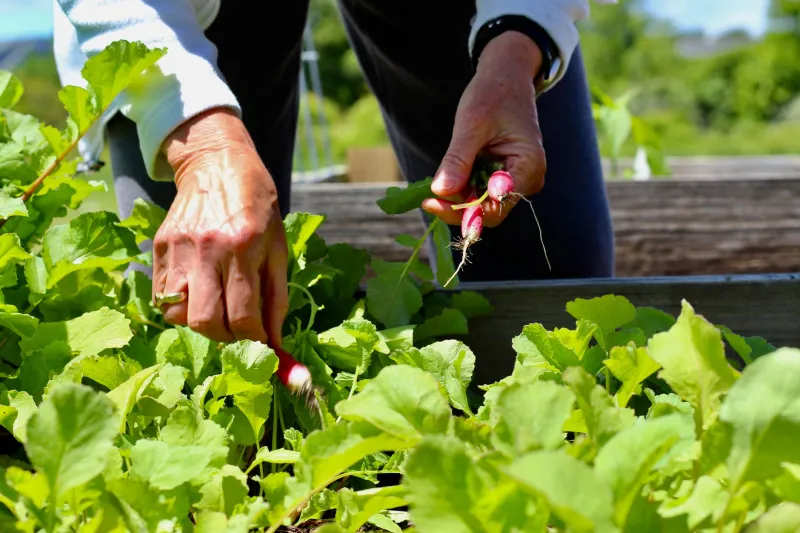
Spring here starts tentatively. March brings the first ramps — those wild, garlicky leeks that foragers lose their minds over — along with early spinach and overwintered root vegetables like parsnips and storage carrots. By April, asparagus arrives like a green proclamation that winter is done. By May, you're into peas, radishes, spring lettuces, and the first strawberries.
Try: Shaved raw asparagus salad with lemon and parmesan. Barely any cooking required, and the flavor is miles away from anything canned or frozen.
Storage tip: Asparagus stays freshest standing upright in a jar with an inch of water in the fridge, like a bouquet of vegetables.
Southeast & Gulf Coast
The South is already weeks ahead. Spring here is really the second act of a long mild winter growing season. Strawberries peak in March across Georgia and the Carolinas. Vidalia onions start coming out of the ground in April. Blueberries begin their long run through May. English peas, snap peas, and early summer squash are all showing up at markets.
Try: Fresh strawberry and Vidalia onion salsa. Sounds weird, tastes incredible. Serve it on grilled fish or just eat it with chips.
Storage tip: Don't wash strawberries until you're ready to eat them — moisture speeds up mold. Store them in a single layer if possible.
Midwest & Great Plains
Spring comes late and can be brutal. March and April are still root vegetable and storage produce territory. But by mid-May, asparagus, rhubarb, and spring onions arrive with a vengeance. Rhubarb is particularly beloved here — tart, ruby-stalked, and deeply underrated.
Try: Rhubarb compote over Greek yogurt with a drizzle of honey. Skip the pie just once and see what happens.
Storage tip: Rhubarb keeps well refrigerated, wrapped loosely, for up to two weeks. It also freezes beautifully — chop and freeze without blanching.
West Coast & Pacific Northwest
This region barely has an "off" season. By March, the Pacific Northwest is already deep into brassica territory — kale, chard, broccoli raab. California's Central Valley is producing citrus, artichokes, and early strawberries. Fava beans, a spring staple here, start appearing in April.
Try: Favas with olive oil, lemon, and shaved pecorino. Classic for a reason.
Storage tip: Fava beans require double-shelling (pod, then skin). Blanch briefly to make the inner skin slip off easily.
Summer (June – August)
Northeast & Mid-Atlantic
This is peak farmers market season. Cherries and early peaches arrive in June. July explodes: tomatoes, sweet corn, zucchini, cucumbers, peppers, green beans, blueberries, blackberries. August adds melons, eggplant, and late-summer peaches. If you're only going to visit a farmers market once a year, make it August in the Northeast.
Try: A simple tomato salad with nothing but flaky salt, olive oil, and torn basil. Good tomatoes need almost no help.
Storage tip: Never refrigerate tomatoes. Cold kills their flavor and texture. Keep them stem-side down on the counter.
Southeast & Gulf Coast
Summer here is intense — both the heat and the produce. Field peas (black-eyed peas, crowder peas, zipper peas) are deeply Southern summer staples. Okra thrives. Watermelon reigns. Peaches from South Carolina are some of the finest in the country.
Try: Slow-cooked field peas with a smoked ham hock, served over rice. Pure comfort.
Storage tip: Fresh field peas can be shelled and frozen immediately — they hold their flavor remarkably well.
Midwest & Great Plains
Sweet corn is the headliner and rightfully so. Illinois, Iowa, and Indiana produce some of the sweetest varieties in the nation when grown for local consumption rather than commodity markets. Tomatoes, cucumbers, peppers, and summer squash round out a glorious July and August.
Try: Corn cut fresh off the cob, tossed in butter and chili powder. Done in five minutes. Perfect every time.
Storage tip: Eat corn as soon as possible after purchase — sugars convert to starch quickly. If you must wait, leave husks on and refrigerate.
West Coast & Pacific Northwest
Stone fruit heaven. Cherries, apricots, nectarines, and plums cascade through June and July. Washington state peaches are exceptional. The Pacific Northwest also produces extraordinary raspberries and marionberries. Tomatoes and peppers peak in August.
Try: A stone fruit galette with a little cardamom in the crust. Rustic, forgiving, and wildly impressive.
Fall (September – November)
All Regions
Fall is the great equalizer — winter squash, apples, pears, and root vegetables show up nearly everywhere. This is the season for stocking up and preserving. Butternut, delicata, acorn, and kabocha squash are all at their best. Apples peak by variety: Honeycrisp in September, Fuji and Braeburn through October.
Try: Roasted delicata squash rings with maple and sage. The skin is edible, which makes prep almost effortless.
Storage tip: Whole winter squash keeps for months in a cool, dark spot. Once cut, wrap tightly and refrigerate for up to a week.
Winter (December – February)
Everywhere (Yes, Really)
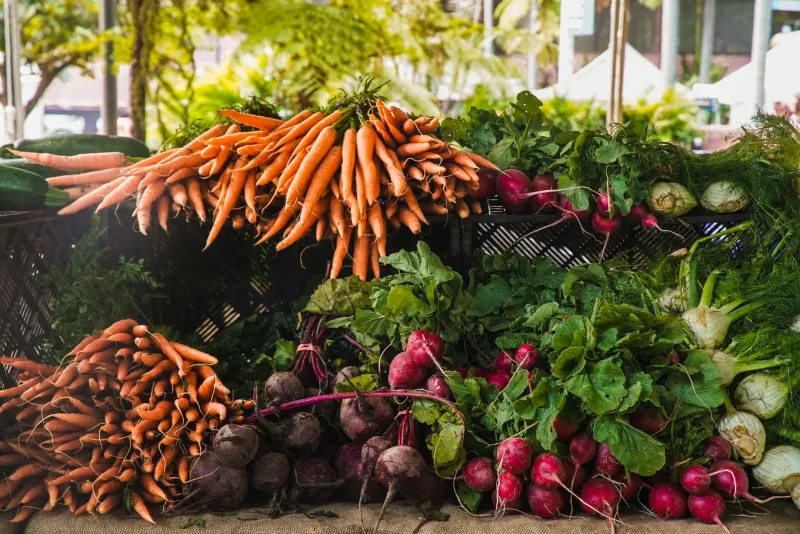
Winter eating isn't about suffering through it — it's about leaning into storage crops and cold-hardy greens. Citrus peaks in California and Florida. Kale, Brussels sprouts, and root vegetables (carrots, turnips, beets, celeriac) are at their sweetest after a frost. Stored apples, onions, and garlic carry through.
Try: Roasted beet and citrus salad with goat cheese and pistachios. Bright, earthy, and deeply satisfying on a gray January afternoon.
Storage tip: Beets keep for weeks in the fridge. Store them without their greens (which draw moisture from the root), but don't discard the greens — they're delicious sautéed.
The Bottom Line
Eating seasonally is less about rules and more about reorienting your relationship with food. When you buy what's abundant and local, you're eating at peak flavor, peak nutrition, and peak value. You're also supporting the farmers in your region who are working with the land rather than against it.
Start small: next time you're at the market, ask the farmer what's best right now. They'll tell you — and they'll probably be pretty enthusiastic about it. That enthusiasm is contagious, and the food it points you toward is always worth it.