Why Regenerative Tomatoes Taste Like a Different Fruit Entirely — And the Science Behind It
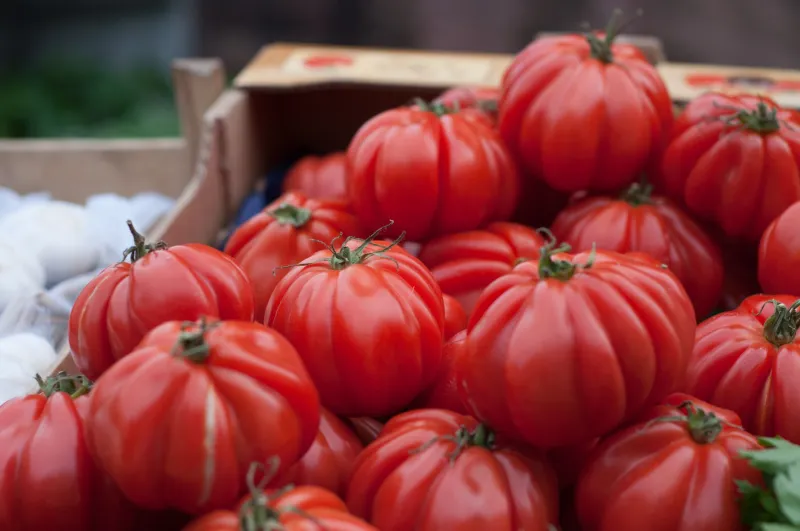
The first time chef Mara Delgado served a tomato from a regenerative farm at her Portland restaurant, a line cook stopped mid-prep and asked what she'd done to it.
She hadn't done anything. That was the point.
"It tasted like a tomato used to taste," she says. "Not a tomato that traveled 1,500 miles in a refrigerated truck. Not a tomato bred to survive a packing line. An actual tomato."
Delgado is one of a growing number of chefs, home cooks, and food-obsessed eaters who've noticed something that's hard to articulate but impossible to ignore: food grown in regeneratively managed soil tastes genuinely, measurably different. More complex. More alive. More like the thing it's supposed to be.
For a long time, this was chalked up to romance — the magic of the farmers' market, the power of suggestion, the bias of someone who paid more and wanted to justify it. But researchers are starting to catch up to what taste buds already knew. The science of why regenerative food tastes better is real, and it begins about six inches underground.
What the Soil Actually Does to Flavor
Flavor in food isn't a single thing. It's a symphony of hundreds of volatile aromatic compounds, sugars, acids, and minerals that interact on your palate and in your nose to create the experience of eating. And the composition of those compounds is directly shaped by what the plant had available to work with in the soil.
Conventional agriculture, by design, narrows that palette. Synthetic NPK fertilizers — nitrogen, phosphorus, potassium — give plants the nutrients they need to grow fast and large. But flavor isn't primarily about size or speed. It's about complexity, and complexity comes from a much wider array of minerals, secondary metabolites, and biological exchanges that a living soil provides.
Plants in healthy, biologically active soil aren't just passively absorbing nutrients. They're engaged in a sophisticated trading relationship with mycorrhizal fungi — networks of thread-like mycelium that extend a plant's root reach by orders of magnitude, delivering calcium, zinc, iron, manganese, and dozens of other micronutrients in exchange for sugars the plant produces. These micronutrients are the building blocks of flavor compounds.
When soil is repeatedly tilled and drenched in synthetic inputs, that fungal network collapses. The plant gets fed, but it eats a narrow diet. The result is produce that looks fine — often bigger and shinier than its regenerative counterpart — but lacks the underlying mineral complexity that makes food taste like something.
The Brix Factor: Sugar and Beyond
One metric that farmers and some chefs have used for decades to assess produce quality is Brix — a measurement of dissolved sugar content, typically taken with a refractometer pressed against a piece of fruit or vegetable juice. Higher Brix generally correlates with sweeter, more flavorful produce, and it's a reliable shorthand for overall plant nutrition.
Regeneratively grown produce consistently scores higher on Brix measurements than conventionally grown equivalents. A conventionally farmed strawberry might register 6 to 8 on the Brix scale. A well-grown regenerative strawberry from living soil can hit 12 to 16. That's not a subtle difference — it's the difference between a strawberry that tastes like water with red dye and one that stops you mid-bite.
But Brix is just one window into a larger story. Researchers at the Bionutrient Food Association have been building a database of nutrient density across thousands of food samples from different farming systems, and their early findings are striking. Produce from farms with higher soil organic matter and biological diversity consistently shows higher levels of polyphenols, antioxidants, and trace minerals — compounds that contribute to both flavor and nutritional value simultaneously.
"The flavor and the nutrition are the same thing," says Dr. David Montgomery, a University of Washington geologist and author of Growing a Revolution, who has studied soil health and food quality extensively. "When a plant is well-nourished by a living soil ecosystem, it produces more of the secondary compounds that both protect it from stress and make it taste complex and interesting to us."
What Chefs Are Actually Tasting
Back in the kitchen, Delgado has built her sourcing entirely around farms she can visit and whose soil practices she can verify. She describes the differences in almost synesthetic terms.
"Carrots from a regenerative farm have this almost earthy sweetness that lingers," she says. "Conventional carrots taste flat by comparison — like the idea of a carrot rather than an actual carrot. Salad greens have bitterness with nuance, not just bitterness. Herbs are more aromatic. You use less of everything because each ingredient is doing more work."
This observation — that regenerative produce is more efficient to cook with because its flavor is more concentrated — comes up repeatedly among professional cooks who've made the switch. It has practical implications for recipe development: you need less salt to season food that already has mineral complexity. You need fewer aromatics when the vegetables themselves are aromatic. The food does more of the lifting.
Chef and food writer Samin Nosrat has spoken publicly about the relationship between ingredient quality and cooking simplicity, and it aligns with what regenerative-sourcing chefs describe: when you start with something genuinely good, the cook's job gets easier and the result gets better.
The Stress Hypothesis
There's another layer to the flavor story that's counterintuitive but well-supported by plant science. Regeneratively grown plants often experience more environmental stress — variable soil moisture, competition from cover crops, insect pressure — than their conventionally pampered counterparts. And stressed plants produce more polyphenols.
Polyphenols are the compounds plants make to defend themselves against UV radiation, pests, and drought. They're also responsible for much of what we taste as complexity in food — the tannins in wine, the bitterness in dark chocolate, the peppery kick in arugula. A plant that has to work a little harder to survive produces more of these compounds, which means more flavor and more antioxidant activity for the person eating it.
Conventional agriculture, by shielding plants from most stressors through pesticides, fungicides, and irrigation, inadvertently produces food that's soft in every sense. Regenerative systems, by working with natural cycles rather than against them, produce plants that have had to develop their full chemical vocabulary.
How to Taste the Difference Yourself
You don't need a lab or a chef's palate to experience this. Here's a simple experiment worth trying:
Buy two tomatoes of the same variety — one from a conventional grocery store, one from a farmers' market vendor who can tell you about their soil practices. Slice both, salt them lightly, and eat them side by side. Don't cook them, don't dress them. Just eat.
Pay attention to how quickly the flavor develops, how long it lingers, and whether there's any complexity beyond the initial hit of sweetness or acid. The difference, for most people, is immediate and undeniable.
That difference isn't marketing. It's biology. It's the taste of a living soil system expressing itself through a plant and onto your tongue. Once you've tasted it, a lot of other produce starts to taste like an echo of the real thing.