Your Gut Is What Your Soil Eats: The Surprising Link Between Farm Health and Digestive Wellness
Something's Missing From Your Food — And It's Not on the Label
You've probably noticed the gut health conversation is everywhere right now. Probiotics are stacked floor-to-ceiling at every pharmacy. Kombucha has its own refrigerated aisle. Half the wellness influencers on your feed are talking about their microbiome like it's a houseplant they're trying not to kill.
But here's the thing almost nobody's talking about: the crisis didn't start in your intestines. It may have started in a field in Iowa.
The emerging science connecting soil microbiology to human gut health is genuinely fascinating — and more than a little alarming. Because if the research holds up, a significant part of the gut dysfunction so many Americans are experiencing isn't just about what we're eating. It's about what's been quietly removed from our food long before it reaches our plates.
What Healthy Soil Actually Contains
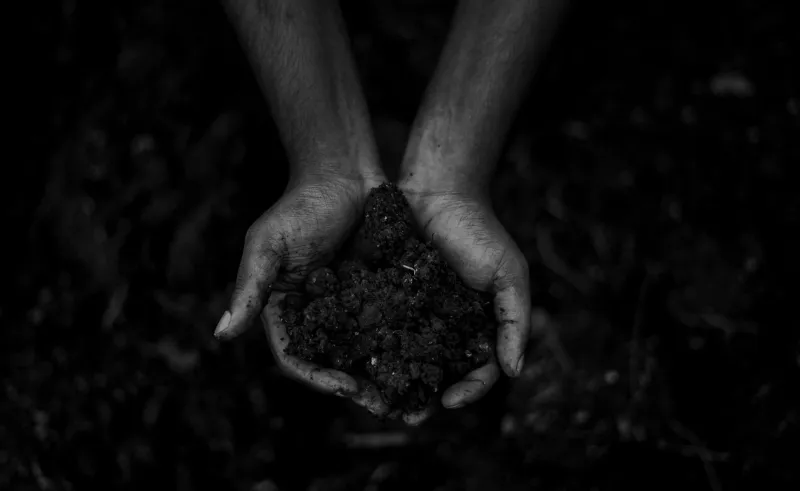
Let's back up for a second. A single teaspoon of living, regeneratively managed soil can contain somewhere between one billion and ten billion individual microorganisms. Bacteria, fungi, protozoa, nematodes — an entire civilization, invisible to the naked eye, working constantly to break down organic matter, cycle nutrients, and make minerals bioavailable to plant roots.
This underground ecosystem doesn't just feed plants. It communicates with them. Through a network of fungal threads called mycorrhizae, plants trade sugars for minerals in a relationship that's been evolving for roughly 400 million years. Healthy soil microbes help synthesize vitamins, suppress pathogens, and produce compounds that influence everything from a plant's flavor to its phytonutrient content.
Now here's where it gets uncomfortable: industrial agriculture has been systematically dismantling this system for the better part of a century.
How Modern Farming Hollowed Out the Ground
Conventional large-scale farming relies heavily on synthetic nitrogen fertilizers, broad-spectrum herbicides like glyphosate, and repeated tillage. Each of these practices, useful as they may be for short-term yield, does measurable damage to soil biology.
Synthetic fertilizers essentially let plants bypass their microbial partnerships. Why maintain an expensive underground network when nitrogen is being delivered directly? Over time, those fungal relationships weaken and the microbial populations that depend on plant root exudates begin to crash. Tillage physically destroys the fungal threads and disrupts the layered structure microbes depend on. And glyphosate — originally patented as a chelating agent and antibiotic — has been shown in multiple studies to alter soil microbial communities, reducing diversity and disrupting the balance between beneficial and harmful species.
The result? A lot of American farmland is growing food in what scientists increasingly describe as biologically impoverished soil. The crops still grow — synthetic inputs make sure of that — but they're growing in something closer to a sterile medium than a living ecosystem.
From Depleted Soil to Depleted Food
This matters to you personally because plants grown in microbe-poor soil are measurably different from plants grown in living soil. A landmark study published in the Journal of the American College of Nutrition compared nutritional data from 1950 to 1999 across 43 common vegetables and found significant declines in protein, calcium, phosphorus, iron, riboflavin, and vitamin C. The researchers pointed to changes in agricultural practices as a likely driver.
More recent work has zeroed in on phytonutrients — the antioxidants, polyphenols, and secondary compounds that plants produce partly in response to environmental stress and microbial signaling. Plants grown in rich, complex soil tend to produce more of these compounds. Plants grown in sterile, input-dependent conditions often produce fewer. Those phytonutrients, it turns out, are some of the most important things your gut microbiome feeds on.
Your gut bacteria don't just eat fiber in some generic sense. They eat specific compounds — particular polyphenols, resistant starches, prebiotic molecules — that are produced in abundance when crops grow in biologically active soil and are scarce when they don't. Feed your gut bacteria a diet of nutritionally thin, microbe-poor food, and their diversity drops. Their populations shift. The protective species decline and the opportunistic ones gain ground.
Sound familiar? It should. It's essentially the same story happening in the field, just playing out inside your body.
The Research Is Starting to Connect the Dots
Scientists studying the gut microbiome have noted that the diversity of human gut bacteria has declined significantly over the past several decades — a trend that tracks closely with the industrialization of the food supply. Researchers at institutions like the Sonnenburg Lab at Stanford have argued that the Western gut microbiome is in a state of crisis, depleted of ancestral microbial species that humans carried for millennia.
Meanwhile, epidemiologists have watched rates of inflammatory bowel conditions, autoimmune disorders, allergies, and metabolic disease climb steeply during the same period that industrial agriculture consolidated its grip on the food system. Causation is notoriously hard to prove in nutrition science. But the correlations are striking, and the biological mechanisms are increasingly well understood.
The soil microbiome and the human microbiome are not separate systems. They're linked — through the food we grow, the microbes that hitch rides on fresh produce, the fermentation cultures that have historically connected agricultural communities to their land. When one ecosystem collapses, the other feels it.
What Regenerative Farms Are Doing Differently
This is where the story gets more hopeful. Regenerative farmers across the country — from small CSA operations in Vermont to larger-scale no-till grain farms in the Midwest — are actively rebuilding soil biology. Cover cropping feeds the microbial community between cash crop cycles. Compost inoculates depleted fields with living organisms. Reduced or eliminated tillage lets fungal networks reestablish. Diverse crop rotations create the complex root exudate environments that support diverse microbial populations.
Foods grown in these systems tend to show higher levels of the phytonutrients and prebiotic compounds that gut microbiomes depend on. Some regenerative farms are even beginning to market their products with soil health data — actual microbial diversity scores — as a quality indicator alongside organic certification.
When you buy a bunch of carrots from a local regenerative farm, you're not just getting a vegetable. You're getting something grown in a community of living organisms that has been carefully tended to produce the most nutritionally complete food that soil is capable of making.
What You Can Actually Do With This
None of this means you need to overhaul your entire diet tomorrow. But it does suggest some practical shifts worth considering.
Seek out farmers who talk about their soil. At your local farmers' market, ask vendors whether they use cover crops or compost. Many small farms are regenerative in practice even if they don't use that exact language. A farmer who's been working the same land for twenty years and cares about what they're leaving behind is usually doing more for soil biology than any certification label guarantees.
Eat produce that's actually in season and locally sourced when you can. Fresh food harvested recently from living soil and eaten quickly retains more of its microbial and nutritional complexity than produce that's been in cold storage for weeks.
And if gut health is something you're actively working on, consider that probiotics and supplements are treating a symptom. Eating food grown in genuinely healthy soil — food with its full complement of prebiotic compounds intact — is working on the root cause.
The gut health crisis and the soil health crisis are the same crisis, viewed from different ends of the food chain. Fixing one probably requires fixing the other. And that starts, as most things do here, with paying attention to what's happening in the ground.