Open the Envelope: Why Heirloom Seeds Are America's Most Underrated Climate Strategy
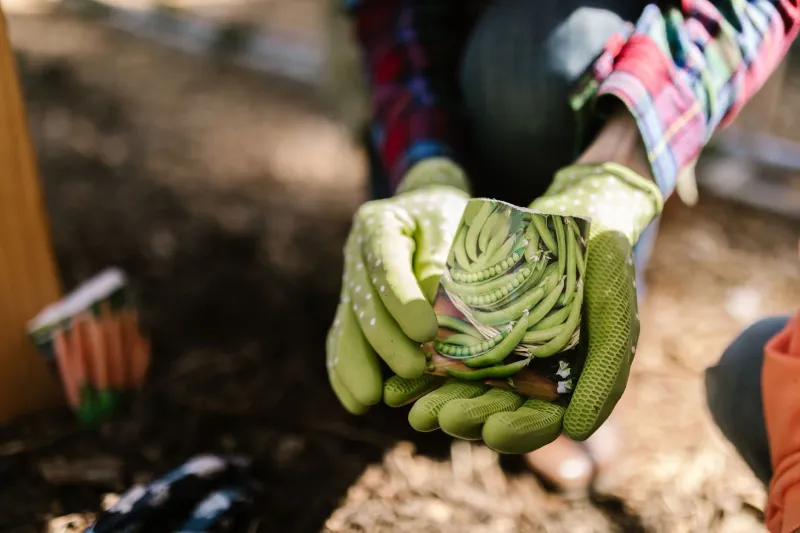
There's something almost radical about a seed catalog these days. Not the glossy, algorithmically optimized kind that shows up in your inbox after you buy a bag of potting mix. We're talking about the hand-stapled, lovingly nerdy kind — the ones that describe a tomato's flavor profile the way a sommelier talks about wine, or list a squash variety's county of origin like it's a point of pride. Which, honestly, it is.
Across the US, a growing movement of independent seed companies, regional seed libraries, and farm-based preservation networks is quietly reshaping what American growers — from backyard gardeners to small commercial farms — can actually put in the ground. And the stakes are higher than you might think.
How We Got Here: The Consolidation Problem
For most of human agricultural history, seeds were passed down, traded, and adapted by the people who grew them. A farmer in the Appalachian foothills saved the beans that performed best in her soil. A market gardener in the Rio Grande Valley selected for the pepper varieties that held up in summer heat. That accumulated, place-specific knowledge was encoded in the seeds themselves.
Then the 20th century happened. Hybrid seed development, the Green Revolution, and eventually the rise of corporate agribusiness slowly narrowed the genetic pipeline. By the early 2000s, just a handful of multinational companies — Bayer (which acquired Monsanto), Corteva, and Syngenta among them — controlled an enormous share of the commercial seed market. Thousands of open-pollinated varieties quietly disappeared from commercial availability. The USDA estimates that somewhere between 75 and 90 percent of the vegetable varieties that existed at the start of the 20th century are now extinct or functionally inaccessible.
That's not just a sentimental loss. It's a structural vulnerability.
Why Genetic Diversity Is a Climate Asset
Here's the thing about monocultures: they're efficient right up until they aren't. When you plant thousands of acres of genetically identical crops, you're betting that this particular plant will handle whatever the season throws at it. In a stable climate, that bet often pays off. In an unstable one, it can collapse catastrophically.
Heirloom and open-pollinated varieties, by contrast, carry wider genetic variation — sometimes within a single seed lot. That variation is the raw material for adaptation. A landrace corn variety developed over generations in the drought-prone Southwest may carry drought-tolerance traits that no modern hybrid has been engineered to replicate. A disease-resistant tomato from a small Italian immigrant community in Pennsylvania might carry resistance to a blight strain that's newly emerging in the Northeast.
Seed diversity, in other words, is biological insurance. And right now, farmers are increasingly cashing in on that policy.
The Independents Making Noise
The good news is that the seed-saving community didn't disappear — it just went underground for a while. Now it's coming back up.
Organizations like the Seed Savers Exchange in Decorah, Iowa have been stewarding heirloom varieties for decades, maintaining a living collection of over 20,000 plant varieties. But they're no longer the only game in town. A new generation of regional seed companies has emerged, and they're doing something slightly different: they're not just preserving old varieties, they're actively trialing them for regional performance and putting them back into commercial circulation.
High Mowing Organic Seeds in Vermont has built a reputation around northern-climate varieties. Uprising Seeds in Washington's Skagit Valley focuses on the Pacific Northwest. Sow True Seed in Asheville, North Carolina centers Appalachian food traditions. Native Seeds/SEARCH in Tucson preserves desert-adapted crops from the Southwest and northern Mexico. Each of these companies is doing regionally specific work that the national seed market simply can't replicate.
And then there are the seed libraries — over 600 now operating across the country, many housed in public libraries or community centers. You check seeds out like books, grow them, save a portion, and return them at the end of the season. It's a beautifully low-tech system that keeps varieties circulating and adapted to local conditions.
Varieties Worth Knowing
So what's actually making a comeback? A few examples worth getting excited about:
Mortgage Lifter tomato — developed in the 1930s by a West Virginia radiator repairman named Radiator Charlie, who paid off his mortgage by selling transplants. It's a massive, meaty slicer that performs well across a wide range of climates and has seen a serious resurgence in home gardens across the mid-Atlantic and South.
Glass Gem corn — a Cherokee-derived flint corn with kernels in every color of stained glass. Beyond its obvious visual appeal, it's a gateway for a lot of growers into the broader world of Native American seed stewardship and the organizations working to return crop sovereignty to Indigenous communities.
Dragon Tongue beans — a Dutch heirloom that's made serious inroads at farmers' markets in the Midwest and Northeast, partly because they're beautiful and partly because they produce abundantly in short seasons.
Jimmy Nardello peppers — a sweet Italian frying pepper brought to Connecticut by an immigrant family in 1887 and preserved by Seed Savers Exchange. Chefs have gone wild for them, and that culinary interest has helped fund the seed-saving infrastructure around them.
Bloody Butcher corn — a deep-red flour corn with roots in Appalachian foodways, now being grown by small mills and craft distillers looking for regionally distinctive ingredients.
What You Can Actually Do
If this is making you want to open a seed catalog right now — great, that's the correct instinct. Here's how to plug in meaningfully:
Buy from regional, independent seed companies. Your dollars directly fund their trialing and preservation work. Look for companies that specify where their seeds were grown and whether they're open-pollinated.
Seek out varieties adapted to your region. A tomato bred for Vermont isn't going to perform the same way in Georgia. Most good independent seed companies will tell you what growing conditions a variety prefers. Pay attention to that.
Learn to save seeds. You don't have to start with everything. Tomatoes, beans, and peas are beginner-friendly. The more you save, the more your plants adapt to your specific microclimate over generations.
Find your local seed library or seed swap. Check with your county extension office, local permaculture guild, or even your public library. These networks are more widespread than most people realize.
Support seed sovereignty organizations. Groups like Native Seeds/SEARCH, the Organic Seed Alliance, and the Seed Savers Exchange do work that goes well beyond what any individual grower can accomplish. Their membership models and donation programs keep critical collections alive.
The Envelope Is the Point
There's something grounding about holding a seed — this tiny, dormant thing that carries the memory of every season it survived before you. Choosing an heirloom variety from a small seed company isn't just a gardening preference. It's a vote for a food system that values place, history, and biological diversity over uniformity and corporate control.
The seed catalog revolution isn't loud. It doesn't trend on social media. But it's happening in trial plots and seed libraries and small farm fields from Vermont to New Mexico, and the crops it's bringing back are exactly the kind of resilient, regionally rooted food our tables — and our climate — need more of.
Open the envelope. See what grows.