What's Living in Your Dirt? The Underground World That Makes or Breaks Your Food
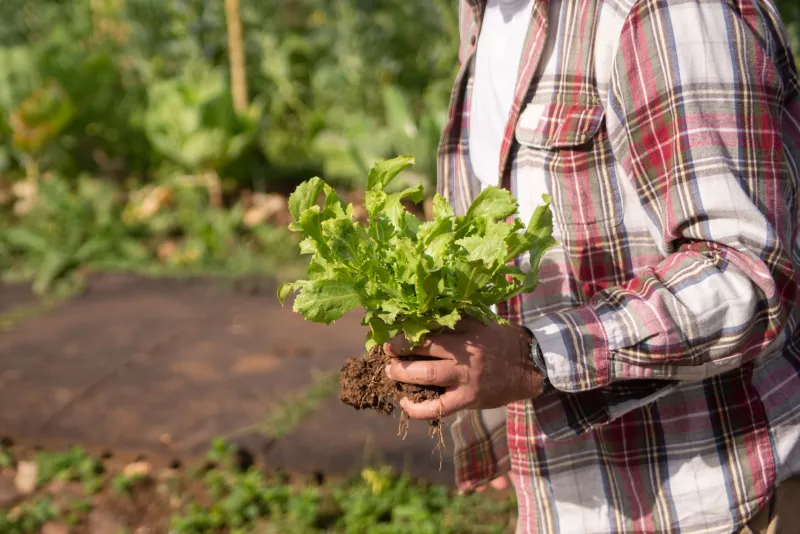
Pick up a handful of rich, dark, crumbly soil from a thriving farm and you're holding something genuinely alive. A single teaspoon of healthy earth contains more microorganisms than there are people on the planet. Bacteria, fungi, nematodes, protozoa — they're all working in intricate partnership to break down organic matter, cycle nutrients, and deliver minerals directly to plant roots. That's not a metaphor. That's the actual mechanism behind every vegetable, grain, and fruit you've ever eaten.
So here's the uncomfortable question: what happens when that system collapses?
For most of industrial America's agricultural history, the answer has been: we just add more fertilizer and hope nobody notices. But a growing chorus of soil scientists, regenerative farmers, and nutrition researchers are making the case that we've been papering over a crisis that shows up — quietly, invisibly — on your dinner plate every single night.
The Depletion Nobody Talks About
Here's a stat that should stop you mid-bite: a landmark study published in the Journal of the American College of Nutrition found that between 1950 and 1999, 43 common garden crops showed measurable declines in protein, calcium, phosphorus, iron, riboflavin, and vitamin C. The researchers attributed this largely to changes in agricultural practices — specifically, the relentless push for higher yields at the expense of soil health.
When you grow the same crop on the same land year after year, drench it in synthetic nitrogen, and till aggressively, you're essentially strip-mining the soil. You extract nutrients faster than natural processes can replenish them. Over decades, you end up with what soil scientists call "degraded" land — dirt that's structurally compromised, biologically depleted, and chemically imbalanced.
"A plant grown in degraded soil is like a kid raised on a diet of processed food," says Dr. Lena Marsh, a soil ecologist who consults with farms across the Midwest. "It survives. It grows. But it doesn't thrive, and it can't give you what it doesn't have."
That matters because plants don't manufacture minerals out of thin air. Magnesium, zinc, iron, selenium — these come from the soil, full stop. If the soil is depleted, the plant is depleted. If the plant is depleted, you are depleted. It's a chain with no workaround.
What Regenerative Farmers Are Actually Doing
The word "regenerative" gets thrown around a lot right now, and it's worth being precise about what it actually means in practice. It's not a single certification or a rigid rulebook. It's more of a philosophy — a commitment to actively rebuilding soil biology rather than just sustaining it.
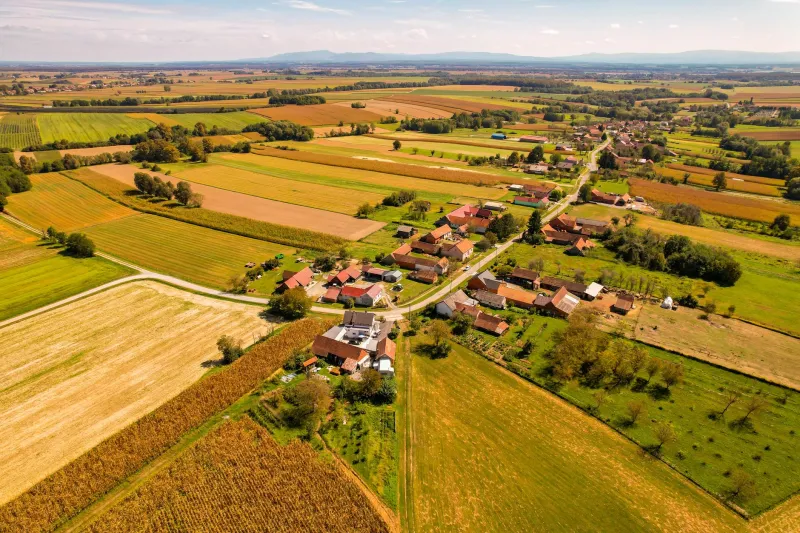
At Clearwater Creek Farm in central Missouri, fourth-generation farmer Marcus Delacroix started transitioning away from conventional corn and soy about eight years ago. He covers-cropped with diverse mixes of legumes and grasses, stopped tilling except in rare circumstances, and began integrating cattle into his rotation to mimic the natural grazing patterns of the bison that once built the prairie's legendary topsoil.
"The first three years were rough," he admits. "Yields dropped. I second-guessed everything. But then the earthworms came back. And then my water infiltration improved. And now my soil organic matter is up nearly two percent, which sounds small but is actually enormous."
Soil organic matter — the decomposed remains of plants, animals, and microbes — is the single best indicator of a soil's health and fertility. Even a one-percent increase can dramatically improve a field's ability to hold water, resist erosion, and supply nutrients to crops. Delacroix's fields now require a fraction of the inputs they once did, and his crops test consistently higher in nutrient density.
This isn't an isolated story. Across the country, from the Willamette Valley in Oregon to the rolling hills of Vermont's Northeast Kingdom, farmers are documenting similar transformations. They're using tools like compost applications, diverse crop rotations, no-till or reduced-till systems, and managed grazing — sometimes called "mob grazing" — to restore biological complexity to land that had been farmed into exhaustion.
The Fungal Highway You've Never Heard Of
One of the most exciting frontiers in soil science involves something called mycorrhizal fungi — networks of thread-like filaments that extend from plant roots into the surrounding soil, dramatically expanding the plant's ability to absorb water and nutrients. In a healthy soil ecosystem, these fungal networks are everywhere, connecting plants, transferring resources, and even facilitating chemical communication between different species.
Conventional tillage destroys them. Synthetic phosphorus fertilizer suppresses them (because why would a plant invest in a fungal partner when phosphorus is being delivered directly?). But in regeneratively managed soils, these networks thrive — and researchers are finding that they correlate strongly with higher mineral content in crops.
"We're just beginning to understand how much of plant nutrition is mediated by these fungal relationships," says Dr. Priya Anand, a mycorrhizal researcher at the University of California, Davis. "When we short-circuit that relationship with industrial practices, we lose something we don't fully know how to replace."
How to Find Farmers Who Get It
You don't need to become a soil scientist to eat better food. But you do need to ask better questions at your farmers market, your CSA sign-up, or your local food co-op.
Here's what to look for and ask:
- Ask about soil practices. Farmers who are doing regenerative work are usually proud to talk about it. Ask if they use cover crops, if they've reduced tillage, or how they manage soil fertility.
- Look for diversity. A farm growing 15 different crops is probably rotating them thoughtfully. Monocultures are a red flag.
- Seek out certifications as a starting point, not an endpoint. USDA Organic is meaningful but doesn't guarantee soil health focus. Look for Regenerative Organic Certified (ROC) or Certified Naturally Grown as additional signals.
- Visit if you can. Many farms welcome visitors. Healthy soil smells earthy and rich, not like nothing. Healthy fields look structurally complex, not barren between rows.
- Support regional food hubs and CSAs. These models tend to favor smaller, more ecologically attentive operations over commodity-scale producers.
The Bigger Picture
Soil health isn't just a personal nutrition issue — it's a climate issue, a water quality issue, and a food security issue all wrapped into one. Healthy soils sequester carbon. They filter water before it reaches aquifers. They resist drought. They produce food that can genuinely nourish people.
The good news is that soil can recover. Unlike some environmental damage, depleted land can be rebuilt within a human lifetime — sometimes within a decade. The farmers doing this work aren't waiting for policy to catch up. They're just doing it, one cover crop and one earthworm at a time.
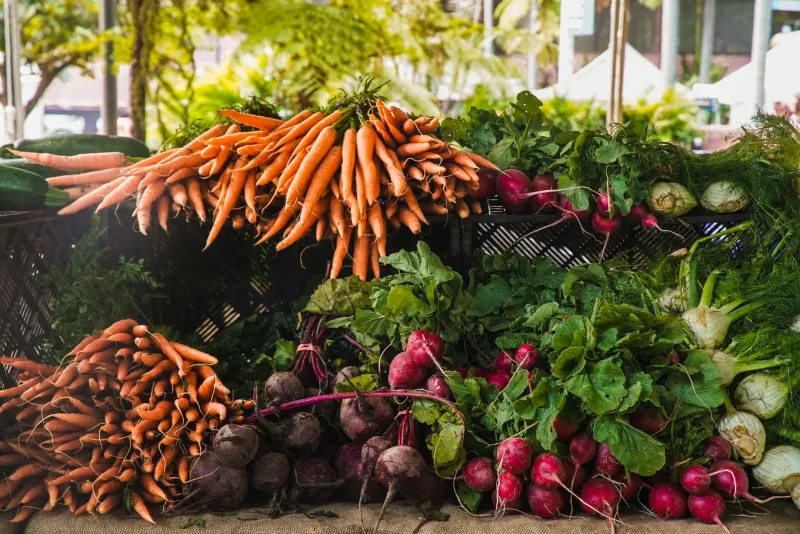
The next time you're standing at a farmers market, staring down a table full of gorgeous tomatoes or leafy greens, remember: you're not just buying a vegetable. You're casting a vote for the ground beneath it. Make it count.