Every Bite Counts: The Hidden Climate Math Behind What's on Your Fork
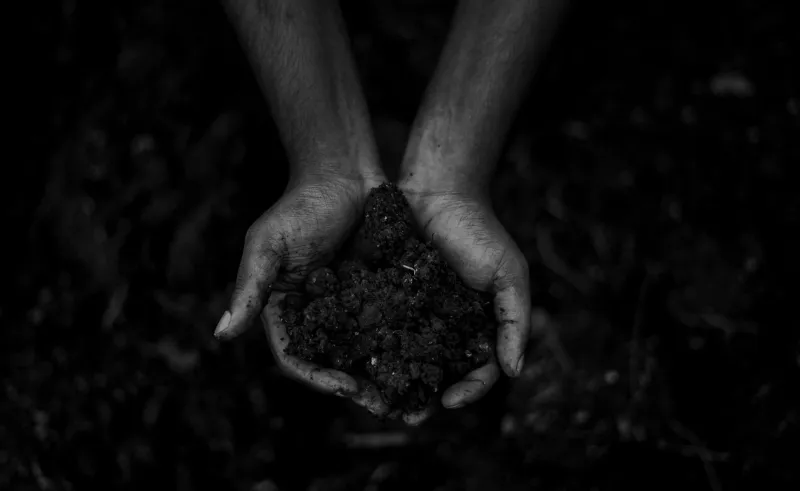
Most climate conversations zoom out to power grids, gas engines, and factory smokestacks. But there's a quieter, slower story playing out right beneath our feet — one that's directly connected to what you had for breakfast this morning. Soil, it turns out, isn't just a growing medium. It's a living ledger, recording the carbon wins and losses of every farming decision made above it.
And here's the part that actually matters for you: what you buy, and where you buy it, has a measurable effect on which side of that ledger tips.
What Even Is Soil Carbon, and Why Should You Care?
Carbon is the building block of life — plants pull it from the atmosphere during photosynthesis and push some of it down through their roots into the soil. In healthy, undisturbed ground, that carbon stays put, stored in organic matter, fungal networks, and microbial biomass. Scientists call this process carbon sequestration, and it's one of the most effective natural climate solutions we have.
Globally, soils hold roughly three times more carbon than the atmosphere. That's an enormous reservoir — and an enormous responsibility. Because when soil is degraded through tillage, synthetic chemical use, or monocrop farming, all that stored carbon gets released right back into the air as CO₂. The same gas we're desperately trying to reduce.
Conventional agriculture, as it's practiced across much of the US corn belt and beyond, has been a net carbon emitter for decades. Deep tilling breaks up the soil structure that locks carbon in place. Synthetic fertilizers disrupt the microbial communities that build organic matter. And bare fields between growing seasons leave soil exposed, eroding both its carbon content and its long-term fertility.
The Regenerative Difference
Regenative agriculture flips this equation. Instead of treating soil like a passive substrate, regenerative farmers work with it as a living system — and that shift in philosophy has real, quantifiable climate consequences.
Take cover cropping: planting fields with rye, clover, or legumes between cash crop seasons keeps roots in the ground year-round, continuously feeding carbon into the soil. Some studies estimate that widespread cover cropping in the US alone could sequester tens of millions of tons of carbon annually.
Then there's no-till or reduced-till farming, which leaves soil structure intact. When you don't churn the ground, you protect the fungal highways — mycorrhizal networks — that shuttle carbon compounds deep into the earth. These networks are fragile, and a single pass of a plow can destroy years of biological infrastructure.
Rotational grazing adds another layer. Managed herds moving across pastureland mimic the patterns of wild grazing animals, stimulating grasses to grow back faster and push more carbon underground. Some regenerative ranches in the American West have documented measurable increases in soil organic matter within just a few growing seasons.
The cumulative effect? Farms practicing regenerative methods can shift from being carbon sources to carbon sinks — actually removing greenhouse gases from the atmosphere rather than adding to them.
The Farmers' Market Is Not Just a Vibe
Okay, so regenerative farming sequesters carbon. But what does that have to do with your Saturday morning farmers' market run?
Everything, actually.
Small and mid-scale farms — the kind you typically find at local markets — are far more likely to practice regenerative methods than large industrial operations. They have more flexibility to rotate crops, experiment with cover crops, and avoid the chemical dependency that conventional commodity farming relies on. When you buy from them, you're directly funding those practices.
It's not just about skipping the grocery store. Every dollar spent at a farm stand or through a local CSA (community-supported agriculture) box is a vote for the kind of farming that keeps carbon in the ground. Contrast that with purchasing commodity produce from a conventional supply chain — where the farm economics actively incentivize tillage-heavy, input-heavy monocultures that are pushing carbon in the wrong direction.
This isn't guilt-tripping. It's just math.
Beyond the Binary: It's Not All or Nothing
Here's where we want to pump the brakes on perfectionism, because the sustainable food world has a tendency to eat its own. Not everyone can shop exclusively at farmers' markets. Not every region has robust local food infrastructure. Food access is real and complicated, and we're not here to shame anyone for buying conventional broccoli at Kroger.
But the carbon ledger doesn't require perfection — it responds to patterns. Shifting even 20 or 30 percent of your food spending toward local, regeneratively-farmed products creates ripple effects. It sustains farmers who are doing the right thing. It signals to distributors and retailers that there's demand for these practices. And over time, it helps build the kind of food system where regenerative isn't a premium niche — it's the default.
Looking for a starting point? Meat and dairy are often the highest-leverage categories. Regeneratively-raised beef from a grass-fed, rotationally-grazed operation sequesters carbon through the pasture it grazes. Conventionally raised beef from a feedlot? The opposite. Same animal, radically different climate footprint.
Reading Between the Labels
One complication worth naming: not every regenerative farm is certified organic, and not every organic farm is practicing regenerative methods. The USDA Organic label tells you what wasn't used — no synthetic pesticides, no GMOs — but it says nothing about soil health practices or carbon outcomes.
This is where building relationships with your food producers actually pays off. Ask your farmers at the market how they manage their soil between seasons. Do they use cover crops? Have they reduced tillage? Are they measuring organic matter over time? These conversations aren't pretentious — they're exactly the kind of informed consumer engagement that moves markets.
Some farms are also beginning to participate in voluntary carbon markets, where they earn credits for verified soil sequestration that companies or individuals can purchase to offset emissions. It's an imperfect system with legitimate criticisms, but it's also creating new revenue streams for farmers willing to manage land regeneratively — which means more farms might make the switch.
The Ground Beneath the Grocery Bill
Climate action doesn't always look like solar panels and electric vehicles. Sometimes it looks like a bag of heirloom tomatoes from a farm twenty miles away, grown by someone who hasn't turned their soil in three years and plants crimson clover every fall.
The carbon your food choices either sequester or release is invisible — but it's real. And unlike a lot of climate levers that feel impossibly far from your daily life, this one sits right at your table, three times a day.
That's not a burden. That's an opportunity.
The soil is keeping score. Might as well make sure it's counting in your favor.