How to Read Between the Lies on Your Grocery Store Shelf
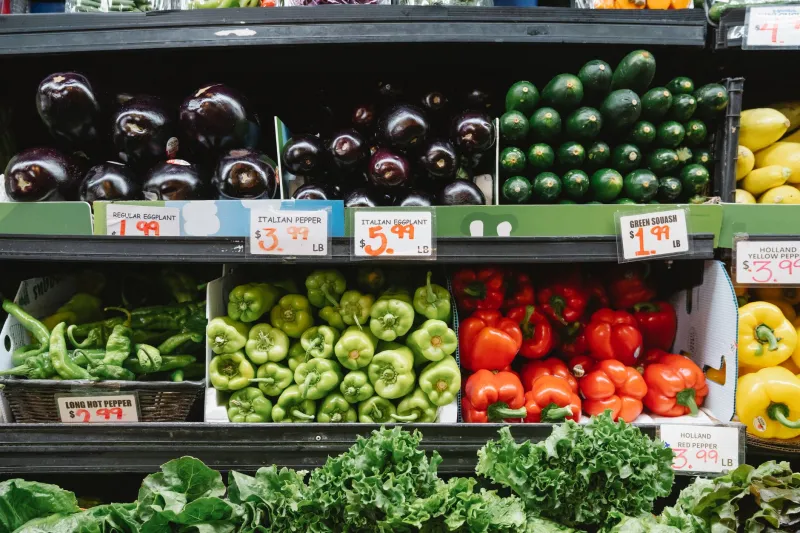
You're standing in the produce section, and there it is: a cheerful little sign that says "Locally Grown" next to a display of tomatoes. Maybe there's a photo of a barn. Maybe there's a farmer's name. You feel good about it. You put the tomatoes in your cart.
Here's the uncomfortable truth: that sign might mean those tomatoes came from 30 miles away. Or 300. Or from a 10,000-acre industrial operation in another state that technically qualifies as "local" under the retailer's own privately defined criteria. There is no federal standard for what "local" means on a food label. None. And the food industry has been very creative in filling that vacuum.
This doesn't mean you can't find genuinely local produce at a supermarket — you can. But it takes a different kind of shopping skill: part label literacy, part supply chain detective work, part knowing which questions to ask and who to ask them to.
Why "Local" Means Whatever Anyone Wants It to Mean
The USDA has offered guidance suggesting that "local" food typically refers to products grown within 400 miles of where they're sold, or within the same state. But that's guidance, not regulation. A retailer can call something local if it came from across the country, as long as they define their terms somewhere in the fine print nobody reads.
Even well-intentioned retailers often source from regional distribution hubs that aggregate produce from dozens of farms across multiple states. When that mixed-origin produce gets a "local harvest" placard, it's not exactly lying — but it's not exactly telling you the full story either.
The terms that get thrown around most loosely include:
- "Local" — no legal definition, entirely up to the retailer
- "Regional" — even vaguer, often means multi-state supply chains
- "Farm Fresh" — purely marketing language with zero regulatory meaning
- "Natural" — also unregulated in most produce contexts; means essentially nothing
- "Sustainably Grown" — no federal standard; can be self-certified by anyone
The labels that do carry legal weight — Certified Organic, USDA Organic, Non-GMO Project Verified, and state-specific programs — are worth knowing. But even these don't tell you where your food actually came from.
State-by-State: What to Look For Where You Live
Some states have developed robust local food identity programs that give you more reliable signals than a generic retailer sign. Knowing what your state offers is one of your best tools.
California: Look for the California Certified Organic Farmers (CCOF) seal, which is among the most rigorous in the country. The state's robust farmers' market infrastructure means many retailers have genuine relationships with in-state producers — but "California Grown" on a label at a national chain still warrants scrutiny, since California is a massive agricultural state with industrial-scale operations that may not align with your values.
New York: The GrowNYC and Greenmarket programs have high sourcing standards, and many NYC-area retailers stock products from these verified networks. The NY Department of Agriculture's "Pride of New York" program identifies state-grown products, though membership is voluntary.
Texas: The Go Texan program, run by the Texas Department of Agriculture, certifies products made or grown in Texas. It's a reliable signal, though it doesn't specify farm size, practices, or distance from your store.
Midwest (Illinois, Iowa, Minnesota, Wisconsin): Look for involvement with regional co-ops like Organic Valley (headquartered in Wisconsin) and check whether your store participates in programs through the Midwest Food Network or state-level farm-to-retail initiatives. Many Midwest grocery co-ops publish detailed sourcing information on their websites.
Southeast (Georgia, North Carolina, Florida): State agriculture departments in these states run "buy local" certification programs, but enforcement varies. Florida's produce travels through major distribution hubs in Miami and Tampa — ask specifically whether "Florida Grown" product came through a distributor or direct from a farm.
Pacific Northwest (Oregon, Washington): These states have some of the most transparent farm-to-retail supply chains in the country. Look for the Oregon Department of Agriculture's "Oregon Grown" program and Washington's "Washington Grown" brand, both of which have more specific sourcing requirements than most.
The Questions That Actually Get Answers
The single most underused tool in your local food arsenal is asking a direct question to a store employee — specifically, the produce department manager, not a floor associate.
Here's what to ask:
"Can you tell me which farms this comes from specifically?" A retailer with genuine local sourcing relationships will usually have this information and be proud to share it. Vague answers like "we work with regional farmers" without specific names are a red flag.
"Does this go through a distribution center or come direct from the farm?" Many "local" products travel from farm to regional distributor to national warehouse to your store — a journey that can span thousands of miles and weeks of transit. Direct-from-farm sourcing is genuinely different.
"What's your definition of local for your store's signage?" This question sometimes produces a stunned pause. That pause is informative.
"Do you carry products from any farms I could visit?" If the answer is yes and they can name one, that's a genuinely good sign.
Certifications Worth Trusting (and Their Limits)
Certified Organic is your most reliable regulatory anchor. It doesn't tell you where food came from, but it does tell you how it was grown — without synthetic pesticides, synthetic fertilizers, or GMOs. For many shoppers, this is the floor-level requirement.
Certified Naturally Grown (CNG) is a peer-reviewed certification used by many small farms that can't afford USDA organic certification but follow equivalent or stricter practices. It's less well-known but highly credible for small operations.
Food Alliance Certified covers both environmental sustainability and fair labor practices — a more holistic signal than organic alone.
Real Organic Project is an add-on certification to USDA Organic that specifically excludes hydroponic operations and requires genuine soil-based growing. If you care about the soil health connection, this label is meaningful.
Be skeptical of house-brand "sustainability" programs run by retailers themselves — Walmart's "Grown Here" or similar proprietary labels have no independent third-party verification.
When Farmers' Markets Aren't an Option
Farmers' markets are the gold standard for supply chain transparency, but they're not accessible to everyone. They're often held on weekday mornings, located in wealthier neighborhoods, and priced beyond what many families can manage week to week. Acknowledging that matters.
If a supermarket is your primary option, the most effective strategies are: build a relationship with your produce manager, learn your state's certification programs, prioritize third-party certified products over retailer-generated labels, and use apps like the EWG's Food Scores or Farmish to cross-reference what's on the shelf.
You're not going to get perfect transparency every time. But you can get a lot closer than most shoppers do — and every informed purchase sends a signal that the food system needs to do better.