Your Banana Peels Are Basically a Coupon: The Cities Paying Residents Back for Compost

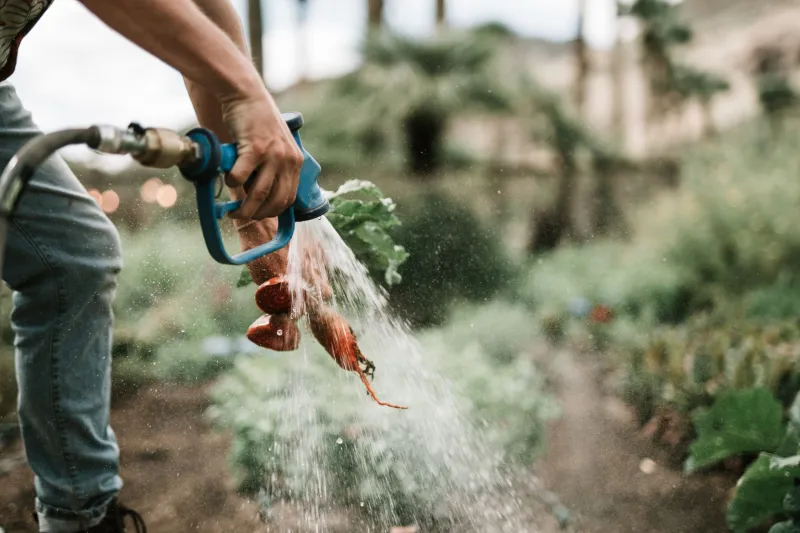
Photo by Photo by Dohyuk You on Unsplash on Unsplash
In a handful of American cities, the green bin on the curb has started paying dividends. Not literally — nobody's writing checks for your coffee grounds — but in a growing number of municipalities, participating households get something back with real monetary value: vouchers spendable at the farmers market, deeply discounted finished compost, or priority access to a community garden bed.
It's a small policy experiment with a big ambition behind it, and it's worth understanding before your city inevitably announces a pilot of its own.
How the Swap Actually Works
The mechanics vary more than the press releases suggest. Three models dominate.
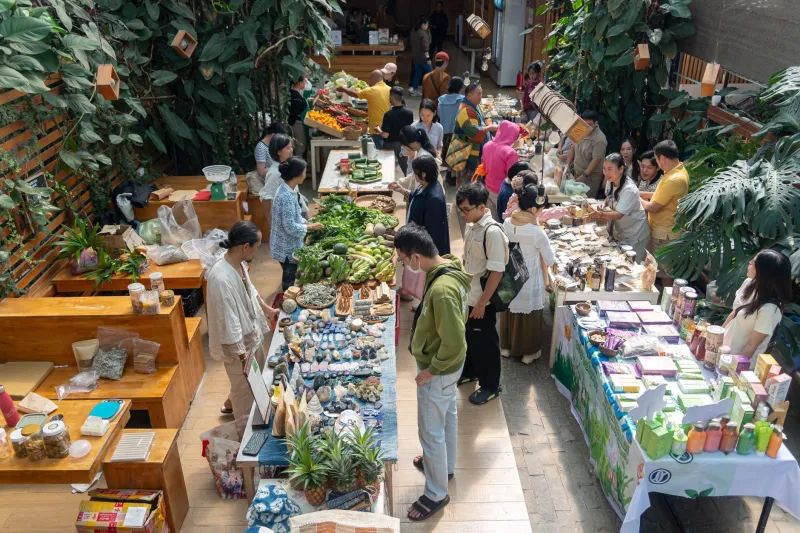
The voucher model. Residents who set out food scraps weekly earn credits good at the Saturday farmers market. In practice, cities usually reimburse the market association directly rather than printing scrip, which means the value flows to growers instead of to a coupon printer. A household participating consistently for a season might accumulate the equivalent of $30 to $60 — modest, but real, and deliberately structured so the benefit lands with the farm vendors.
The compost dividend. Participants get finished compost back at a steep discount, sometimes free at a few pickup events a year. This model works best in cities that already run their own processing site, because the output is the product.
The garden-bed fast lane. Scrap collectors get bumped up the waitlist for municipal community garden plots. In cities where that waitlist runs three years deep, this is the most valuable thing on offer, full stop.
The Soil Science Is Not in Dispute
Of the three, the agronomic case is the least controversial. Municipal compost done correctly returns organic matter to soil that badly needs it. It improves water-holding capacity, which matters more every summer. It feeds the microbial life that turns dirt into something that behaves like a living system. And it keeps food scraps out of landfills, where they'd otherwise generate methane in the oxygen-starved conditions of a burial mound.
None of that is novel or contested. The interesting question is quality.
Compost is only as good as its feedstock and its process. A well-managed windrow turned and monitored reaches temperatures that kill pathogens and weed seeds. A poorly managed pile does not, and what comes out the other end can carry plastic fragments, pesticide residue, and enough salt to make a garden unhappy. Cities that run this well test their output and publish the results. Cities that run it as a public-relations exercise do neither.
Ask for the test data. It should exist.
Where the Money Runs Out
Now the less lovely part. Curbside collection of food scraps is dramatically more expensive per ton than collecting trash, because the trucks fill up fast, the routes are inefficient, and the material is heavy and wet. Processing adds another layer. A city needs a site, equipment, staff, and somewhere for the finished product to go.
The arithmetic gets uncomfortable fast. Collection and processing can run several hundred dollars per participating household annually, while the recovered compost might sell — where a market even exists — for a fraction of that. The gap is closed with general fund money, which is to say, with a policy choice that someone has to defend at budget time.
This is not an argument against doing it. Landfill tipping fees are also a subsidy, just a less visible one, and methane is not a rounding error. But it is an argument for honesty: if your city rolls out curbside compost, the sticker price per ton is going to look bad next to the alternative, and the case has to be made on the externalities, not on the compost revenue.
The voucher model deserves credit here for a reason that's easy to miss. It's cheaper than a public education campaign and it works better. Getting people to sort their scraps requires habit, and habit requires feedback. Money at the market is feedback you can spend on tomatoes.
The Contamination Problem Nobody Warns You About
Here's the thing that quietly kills programs. A single greasy pizza box — actually fine, mostly — is not the issue. The issue is plastic. Produce stickers. Compostable-looking packaging that isn't. Bags that say "plant-based" and behave like polypropylene.
Contaminated loads get rejected or downcycled, and a few bad weeks can wreck an entire batch. Successful programs usually invest in a lot of up-front hand-holding: kitchen caddies with the rules printed on the lid, a sorting app, drivers who flag repeat offenders. It's unglamorous and it's the difference between a functioning program and an expensive reminder that humans are bad at instructions.
What to Ask Before You Sign Your Household Up
Four questions, in order of how often cities dodge them:
- Where does the material actually go? A real processing facility with a name and an address, or a landfill with extra steps?
- What's the contamination rate, and how is it handled? If nobody knows, that's the answer.
- Is finished compost tested, and are results public? Heavy metals and pathogens, not vibes.
- Who's on the hook in year three? Grants fund pilots. Pilots have a way of quietly disappearing when the grant runs dry.
Done well, this is one of the more tangible climate policies a city can hand a household — a weekly act that moves tonnage out of a landfill and into a field that grows your food. Done carelessly, it's a bin nobody understands and a budget line nobody wants to defend.
The difference, mostly, is whether anyone bothered to think through the second year.