Decoding the Sticker: A No-Nonsense Guide to Food Labels That Actually Mean Something
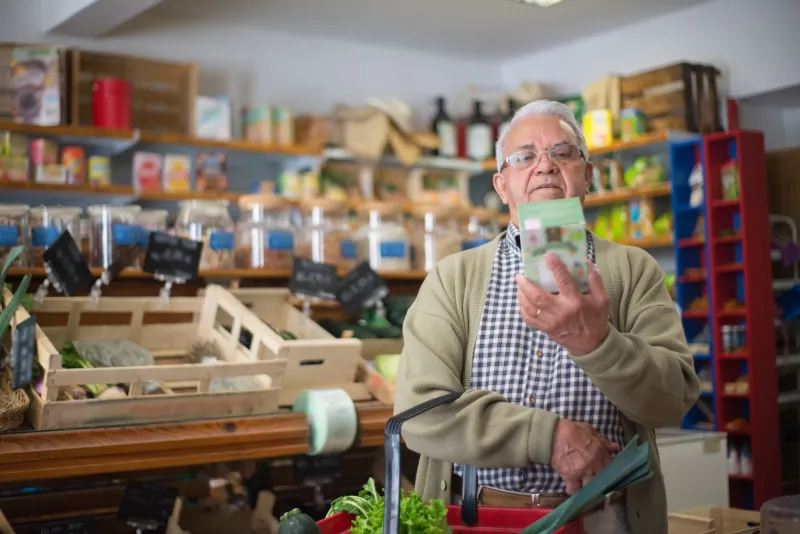
Stand in the cereal aisle for five minutes and count the claims. Natural. Sustainably sourced. Eco-friendly packaging. Farmer-owned. Crafted with care. By the time you reach the granola section, you've been marketed to by about forty different versions of "we're one of the good guys," most of which have no legal definition, no third-party verification, and no accountability whatsoever.
The proliferation of food labels isn't a consumer service. A lot of it is strategic confusion — if every product claims to be sustainable, the word stops meaning anything, and the companies doing real work get buried in the noise alongside the ones doing very little.
So let's cut through it. Here's an honest breakdown of the certifications and labels you'll actually encounter at farmers' markets, natural food stores, and even mainstream grocery chains — ranked roughly by how much they actually demand from the producers who carry them.
The Ones With Real Teeth
Regenerative Organic Certified (ROC)
This is currently the most rigorous certification available for food grown in the United States, and it's still young enough that most people haven't heard of it. Launched in 2018 by the Rodale Institute, Patagonia, and Dr. Bronner's, ROC builds on USDA Organic as a baseline and layers three additional pillars on top: soil health and land management, animal welfare, and farmer and worker fairness.
To earn ROC certification, a farm must already be USDA Organic certified, then demonstrate active improvement in soil carbon, biodiversity, and ecological function. It's audited by third parties, it has tiered levels (Bronze, Silver, Gold) that track progress over time, and it explicitly prohibits practices like synthetic inputs and confined animal feeding operations.
If you see ROC on a product, someone actually checked. It means something.
Demeter Biodynamic
Biodynamic farming predates the organic movement by about two decades, developed by Austrian philosopher Rudolf Steiner in the 1920s. The Demeter certification — named for the Greek goddess of grain — is the international standard for biodynamic agriculture, and it is genuinely demanding.
Biodynamic farms are managed as closed-loop ecosystems: they must produce their own fertility on-site, maintain specific percentages of their land in biodiversity-supporting habitat, and follow a planting calendar tied to lunar and astronomical cycles. That last part raises eyebrows in scientific circles, but the practical requirements — composting, cover cropping, livestock integration, zero synthetic inputs — are ecologically sound regardless of the philosophical framework around them.
Demeter certification requires third-party inspection and prohibits all synthetic pesticides, herbicides, and fertilizers. It's stricter than USDA Organic in several meaningful ways, including a requirement that at least 10% of a farm's total area be set aside for biodiversity. If you encounter Demeter-certified products at a specialty market or co-op, they represent a high bar.
Fair Trade USA and Fairtrade International
These two certifications are related but distinct, and both address something that purely environmental labels often ignore: the human beings growing the food.
Fair Trade certification requires that producers receive a minimum price for their goods (protecting against market volatility), that buyers pay a social premium that goes into a community fund controlled by the farmers, and that specific labor standards are met. Fair Trade USA has faced some criticism for expanding its scope to include large plantation farms, which dilutes some of the original small-farmer focus. Fairtrade International (the international body) maintains stricter small-producer requirements.
For coffee, chocolate, bananas, and other tropical commodities grown primarily in the Global South, Fair Trade certification is one of the most meaningful tools consumers have for ensuring the people at the bottom of the supply chain aren't being exploited.
USDA Organic
Organic gets a lot of grief these days — some of it deserved — but the baseline USDA Organic certification is still worth understanding and still meaningfully better than nothing.
To carry the USDA Organic seal, a product must be grown without synthetic pesticides, synthetic fertilizers, GMOs, sewage sludge, or irradiation. For livestock, it requires access to pasture and prohibits antibiotics and growth hormones. Third-party certifiers inspect farms, and violations can result in decertification.
The legitimate criticism of USDA Organic is that it says nothing about soil health, carbon sequestration, worker welfare, or water management. A farm can be technically organic while still tilling aggressively, monocropping, and providing minimal ecological benefit. But it does guarantee the absence of the most harmful synthetic inputs, which is a real floor.
For produce especially, organic certification meaningfully reduces your exposure to pesticide residues. It's not the ceiling — it's the floor.
The Middle Ground: Useful But Limited
Animal Welfare Approved (AWA) / Certified Humane
For meat, dairy, and eggs, these certifications fill a gap that USDA Organic doesn't fully address. AWA (now administered under the A Greener World umbrella) has some of the strongest pasture-access and behavioral requirements of any livestock label. Certified Humane, run by Humane Farm Animal Care, is widely recognized and requires meaningful space allowances and natural behaviors.
Neither of these is primarily an environmental certification, but well-managed animal welfare often correlates with better land management. Animals that live outdoors, on pasture, tend to be part of farming systems that build rather than degrade soil.
Non-GMO Project Verified
This one is everywhere, and it's worth understanding what it actually does and doesn't mean. Non-GMO Project Verified confirms that a product was produced without genetically modified organisms. That's it. It says nothing about pesticide use (many non-GMO crops are heavily sprayed with conventional chemicals), nothing about soil health, and nothing about labor practices.
For products like corn, soy, canola, and sugar beets — crops where GMO versions dominate the conventional supply — Non-GMO verification is meaningful as a single data point. But it's frequently applied to products like salt and orange juice, which have no GMO versions in the first place. When you see Non-GMO Project Verified on sea salt, that's marketing, not information.
The Ones to Skip
"Natural"
This label has no legal definition from the FDA or USDA for most food products. It means nothing enforceable. A product can contain high-fructose corn syrup, artificial flavors, and conventionally grown ingredients and still call itself "natural." Ignore it entirely.
"Sustainable" (Unverified)
Unless this claim is backed by a specific third-party certification — and the certification is named — it's a marketing statement with zero accountability. Companies are free to define sustainability however they like, and many do so very liberally.
"Eco-Friendly Packaging" (Without Specifics)
This is packaging marketing, not food system marketing. It tells you about the container, not the farm. A product with recycled paperboard packaging can still be grown with heavy pesticide use in depleted soil. Don't let the box distract you from what's inside.
Your Practical Field Guide
Here's the honest summary for navigating real shopping situations:
At the farmers' market: Skip the labels entirely and talk to the farmer. Ask what they use for pest management, whether they till, and how they handle soil fertility. The conversation itself is more informative than any sticker. Many small farms practice beyond-organic methods but can't afford certification.
At the natural food store: Prioritize ROC, Demeter Biodynamic, and USDA Organic, in that order. For meat and dairy, add AWA or Certified Humane. For coffee and chocolate, look for Fair Trade.
At the conventional grocery store: USDA Organic is your most accessible meaningful option. Non-GMO Project is a secondary signal for high-risk crops. Everything else on the label is noise until proven otherwise.
The label system is imperfect, inconsistent, and genuinely confusing — partly by accident and partly by design. But knowing which certifications required real accountability and which ones required only a graphic designer gives you a meaningful edge. Use it.